
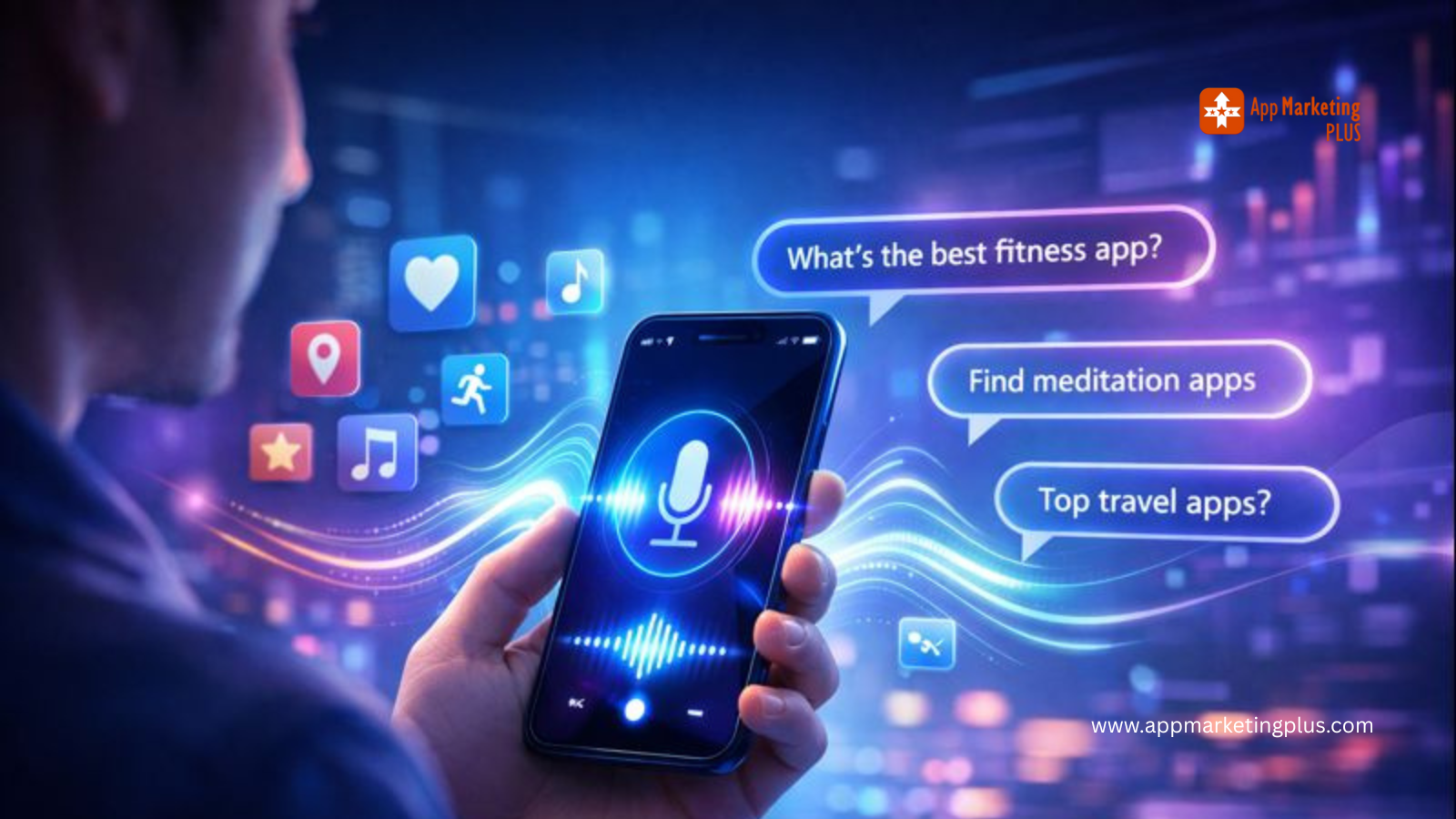
Voice search has evolved from novelty to necessity. With over 8.4 billion voice assistants in use worldwide and 71% of consumers preferring voice search over typing, the way users discover and interact with apps has fundamentally transformed. Yet most app developers still optimize exclusively for traditional text-based search, missing massive opportunities as voice queries now account for 27% of all online searches.
The gap between voice search’s prevalence and app optimization creates enormous competitive advantages for early adopters. While competitors ignore conversational queries, apps mastering voice search optimization capture high-intent users discovering solutions through Siri, Google Assistant, Alexa, and emerging voice interfaces.
This comprehensive guide reveals exactly how to optimize mobile apps for voice discovery in 2026. From understanding conversational query patterns to implementing structured data to optimizing for featured snippets, these strategies ensure your app appears when users ask voice assistants for recommendations.
Understanding Voice Search for Mobile Apps
Voice search optimization involves structuring your app’s content, metadata, and web presence to rank for conversational queries users speak to voice assistants rather than type into search boxes.
The fundamental difference? Voice queries are longer, more conversational, and question-based. Instead of typing “fitness app,” users ask “what’s the best fitness app for beginners?” This shift from keywords to natural language requires completely different optimization approaches.
Voice search directly impacts app discovery through several pathways:
Direct App Recommendations: Voice assistants recommend apps when users ask questions like “what app should I use for meditation?”
Featured Snippet Answers: When your content appears in featured snippets, voice assistants often read those answers aloud, including app mentions.
Local Search Integration: Voice queries like “apps near me” or location-specific questions connect users with relevant apps serving their geographic area.
Why Voice Search Optimization Matters Now
The statistics are compelling and accelerating:
Massive Adoption: By 2026, over 50% of searches are conducted via voice, making voice optimization essential rather than optional.
Higher Intent: Voice searchers often demonstrate stronger intent than text searchers. Voice queries like “best fitness tracker app for marathon training” indicate users ready to download, not just browsing.
Competitive Advantage: Most apps haven’t optimized for voice, creating opportunities for early movers to dominate conversational queries before competition intensifies.
Future-Proofing: Voice interfaces continue proliferating across smart speakers, cars, TVs, and IoT devices. Optimization now positions apps for emerging voice discovery channels.
How Voice Search Differs From Text Search
Understanding these differences is fundamental to effective optimization:
Query Length and Structure
Text searches average 1-3 words while voice searches average 5-7 words. Users speak complete questions naturally rather than abbreviated keyword phrases.
Text: “meditation app” Voice: “what’s the best meditation app for anxiety and sleep?”
Conversational Language
Voice queries use natural conversational patterns including question words (who, what, where, when, why, how), complete sentences, and colloquial phrasing. Users speak to voice assistants like they’d speak to humans.
Local Intent
Voice searches are three times more likely to be local-based than text searches. Users frequently add “near me” or specify locations when speaking queries.
Question Format
Voice queries overwhelmingly take question form. Optimizing for the who, what, where, when, why, and how questions relevant to your app category is essential.
8 Proven Voice Search Optimization Strategies
Strategy 1: Optimize for Conversational Keywords
Research long-tail conversational phrases users would speak rather than type. Tools like AnswerThePublic, AlsoAsked, and Google’s “People Also Ask” reveal common question patterns around your app category.
Focus on natural language questions:
- “What’s the best [category] app for [specific use case]?”
- “How do I [accomplish goal] using an app?”
- “Which app helps with [problem]?”
Integrate these conversational phrases naturally into your app store description, website content, and blog posts.
Strategy 2: Target Featured Snippets
Voice assistants frequently pull answers from featured snippets—the highlighted results appearing at the top of search results. Ranking for featured snippets dramatically increases voice search visibility.
Optimize for snippets by:
- Answering questions directly and concisely in content
- Using structured formatting (numbered lists, bullet points, tables)
- Providing clear definitions of terms and concepts
- Creating FAQ sections addressing common queries
Strategy 3: Implement Schema Markup
Structured data helps voice assistants understand your content and app details. Implement schema markup including:
App Schema: Identifies your app with attributes like name, category, rating, price, and operating system compatibility
FAQ Schema: Marks up question-and-answer content making it accessible to voice assistants
Local Business Schema: For location-based apps, local business markup improves discovery in geographic voice queries
Review Schema: Rating and review markup helps voice assistants understand your app’s quality and user satisfaction
Strategy 4: Create Comprehensive FAQ Content
FAQ pages naturally align with voice search patterns since they answer specific questions users would ask voice assistants.
Develop extensive FAQs covering:
- How your app works
- What problems it solves
- Who it’s designed for
- Pricing and monetization
- Platform availability
- Feature comparisons with alternatives
Structure each question-answer pair with the question as a header and concise answer below—ideal formatting for featured snippet capture and voice assistant reading.
Strategy 5: Optimize for Local Voice Search
For apps with local relevance, local SEO becomes critical for voice discovery. Optimize through:
Google Business Profile: Maintain accurate, complete profiles with descriptions mentioning your app
Local Keywords: Include geographic modifiers in content (“best fitness app in [city]”)
Location Pages: Create dedicated pages for different service areas
Local Backlinks: Earn links from local directories, news sites, and community organizations
Strategy 6: Improve Page Speed and Mobile Experience
Voice searches predominantly happen on mobile devices, making mobile optimization essential. Google prioritizes fast-loading, mobile-friendly sites for voice results.
Optimize technical performance:
- Compress images and minimize code
- Implement lazy loading
- Use content delivery networks (CDNs)
- Ensure responsive design across devices
- Test mobile usability regularly
Strategy 7: Create Long-Form, Authoritative Content
Voice search results average 2,312 words, suggesting comprehensive, in-depth content ranks better for conversational queries.
Develop authoritative content including:
- Ultimate guides explaining your app category comprehensively
- Comparison articles contrasting your app with alternatives
- How-to tutorials demonstrating app usage
- Industry insights establishing thought leadership
Strategy 8: Focus on Natural Language Processing
Voice assistants use sophisticated NLP to interpret queries. Optimize content using semantic keywords—related terms and concepts naturally surrounding core keywords rather than exact-match repetition.
Write naturally for humans rather than stuffing keywords. Voice assistants reward conversational, helpful content that genuinely answers user questions.
Measuring Voice Search Success
Tracking voice search performance requires monitoring specific metrics:
Featured Snippet Rankings: Track how many featured snippets your content captures for target queries
Voice Search Traffic: Google Search Console and analytics tools increasingly identify voice-originated traffic
Question-Based Keywords: Monitor rankings for conversational, question-format queries
Mobile Performance: Voice search overwhelmingly happens mobile, making mobile rankings especially important
Engagement Metrics: Voice search visitors who find exactly what they need demonstrate strong engagement signals
Voice Search Optimization Tools
Several tools facilitate voice search optimization:
AnswerThePublic: Reveals questions people ask about topics, perfect for identifying conversational queries
SEMrush: Tracks question-based keywords and featured snippet opportunities
Ahrefs: Identifies keywords triggering featured snippets where your content could rank
Google Search Console: Shows actual queries driving traffic including voice-originated searches
Schema Markup Validators: Test structured data implementation ensuring proper voice assistant interpretation
Frequently Asked Questions
How do I know if users find my app through voice search?
Google Search Console provides some insights into query types, though precise voice attribution remains limited. Monitor increases in long-tail, question-based keyword traffic and featured snippet rankings as indicators of voice search success. Analytics tools increasingly tag voice-originated sessions.
Should I optimize differently for Siri vs Google Assistant vs Alexa?
Core optimization principles apply across voice assistants, though platform-specific features exist. Google Assistant pulls heavily from Google Search results, making traditional SEO relevant. Siri increasingly uses Apple Maps and Yelp for recommendations. Alexa has separate skills ecosystem. Focus first on universal optimization then refine platform-specific approaches.
Can voice search directly trigger app downloads?
Increasingly yes, particularly on mobile devices. When voice assistants recommend apps meeting user query criteria, they often provide direct links to app store listings. Optimizing your app store presence ensures conversion once voice discovery occurs.
How long does voice search optimization take to show results?
Featured snippet capture can happen within weeks if content strongly addresses target queries. Broader voice search visibility typically develops over 2-4 months as search engines recognize content authority and relevance. Voice optimization delivers compounding returns as more queries trigger your content.
Do I need separate content for voice search optimization?
Not necessarily. Enhance existing content with conversational keywords, question-based headers, FAQ sections, and structured data. The goal is making content voice-search-friendly without creating entirely separate assets. Strategic content optimization often suffices.
Capturing Voice Search Opportunities
Voice search optimization for mobile apps isn’t futuristic speculation—it’s present-day necessity as voice queries dominate how users discover solutions. Apps that master conversational optimization, featured snippet capture, and structured data implementation gain significant competitive advantages in voice-driven discovery.
Start by researching conversational queries in your category, optimizing existing content with natural language and question-based structures, implementing schema markup, and creating comprehensive FAQ resources. These foundational steps position apps for voice discovery across all major assistants and platforms.
Ready to dominate voice search and capture users discovering apps through conversational queries? App Marketing Plus specializes in comprehensive voice search optimization strategies combining conversational keyword research, technical implementation, and content optimization. From structured data setup to featured snippet targeting to performance tracking, we ensure your app appears when users ask voice assistants for recommendations.
Contact us today to discover how voice search optimization can unlock new discovery channels and drive high-intent users to your mobile app in 2026 and beyond